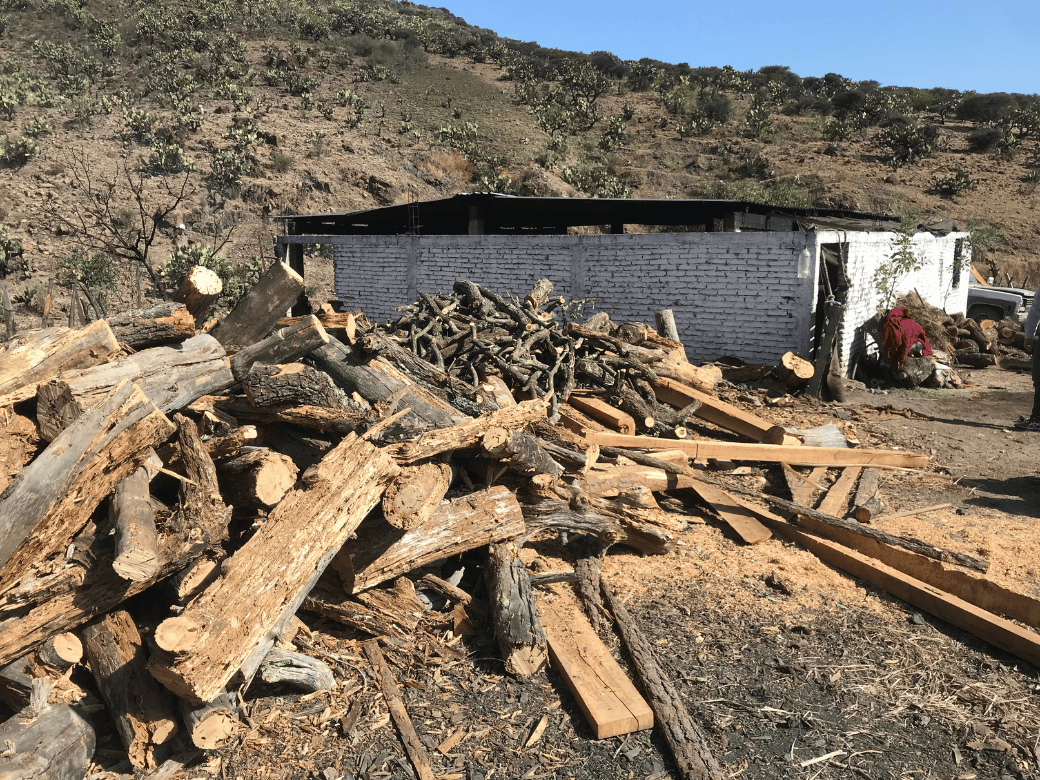
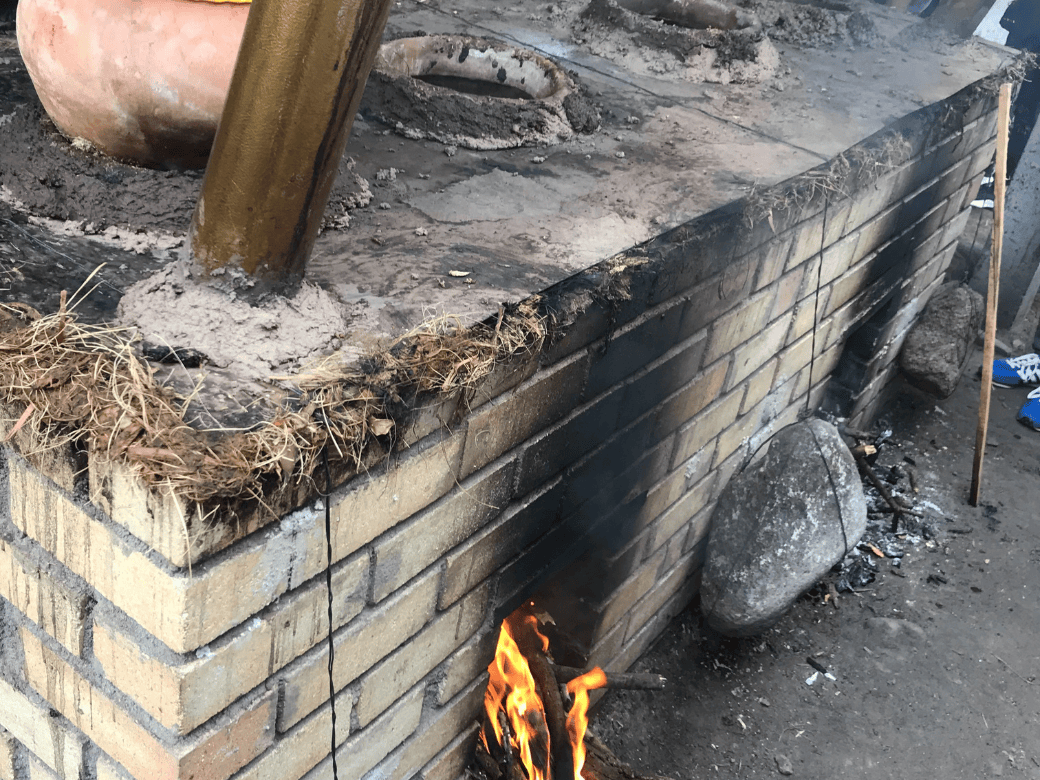
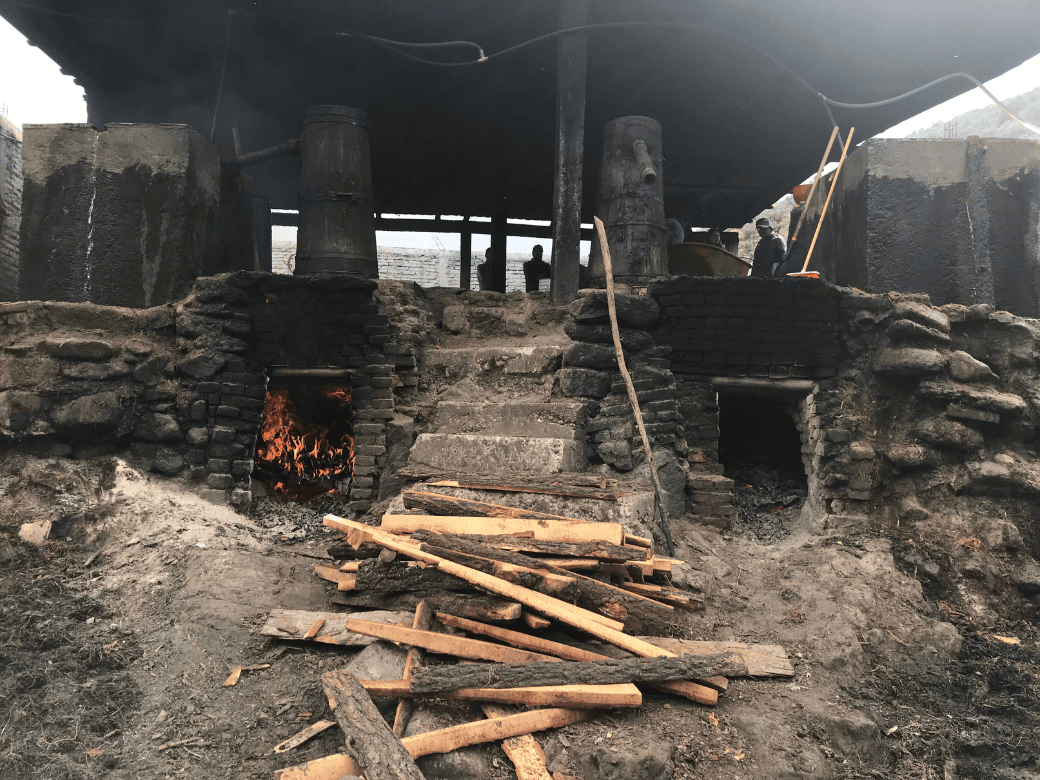
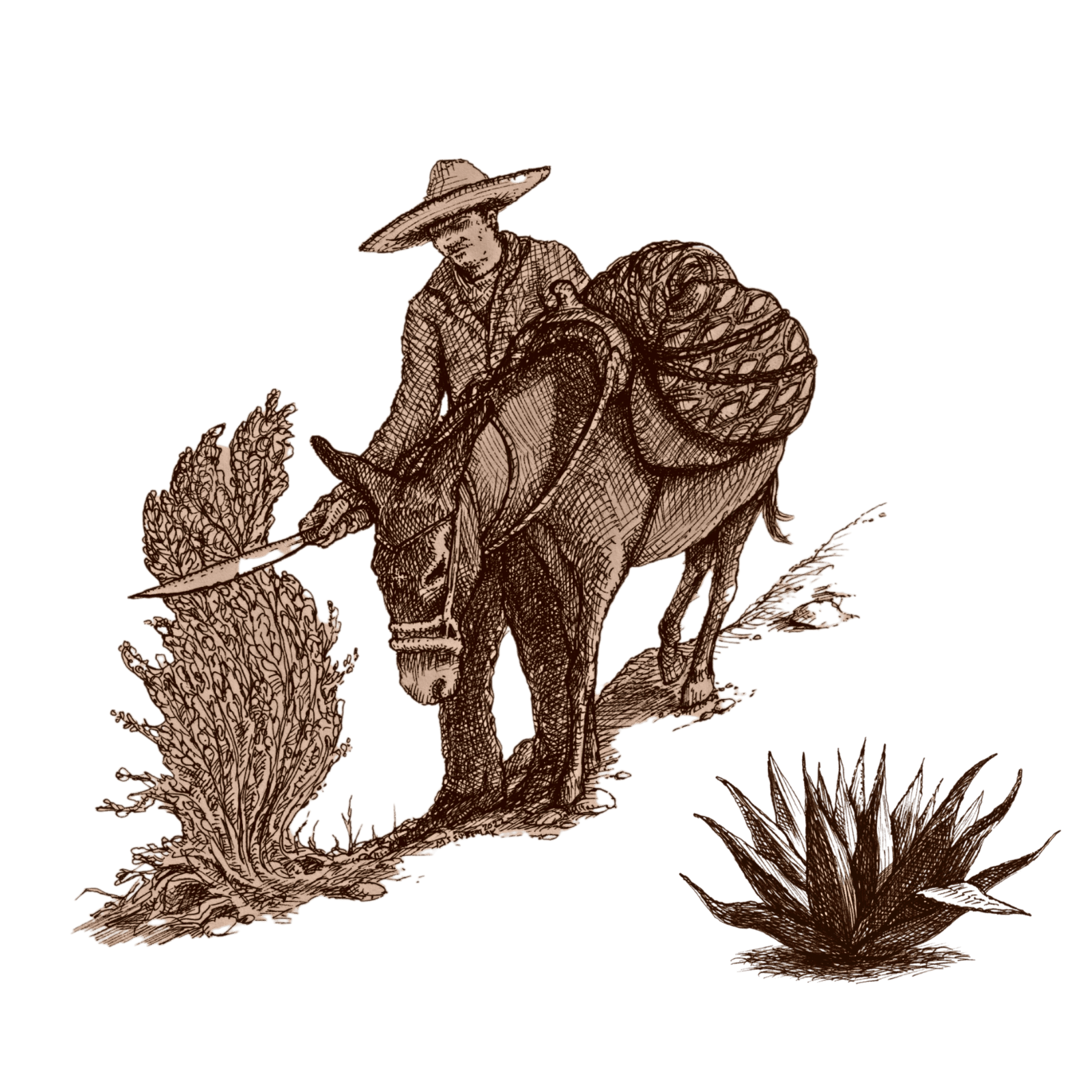
The production of Trago Sagrado follows a sequence shaped by geography, tradition, and limitation.
Each step is manual, small in scale, and carried out without modern machinery or shortcuts.
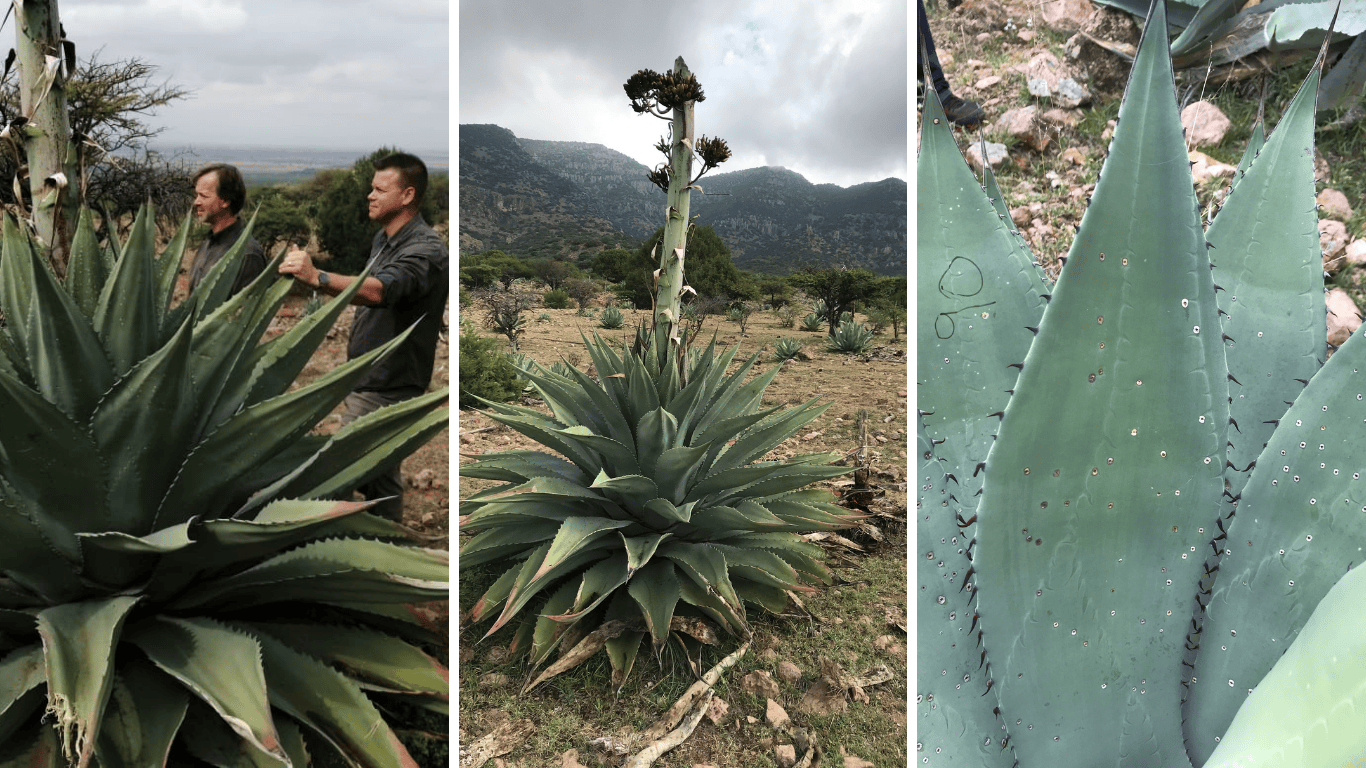
1. Harvesting Wild Agave
Trago Sagrado is made exclusively from 100% wild Agave Durangensis, locally known as Maguey Cenizo. Each plant grows naturally in the mountains of Durango and matures over twelve to fifteen years before harvest. Harvesting is selective. Only fully mature agaves are taken, while the strongest plants are left to flower and reseed, ensuring the continued regeneration of wild agave populations.
2. Transport by Burro
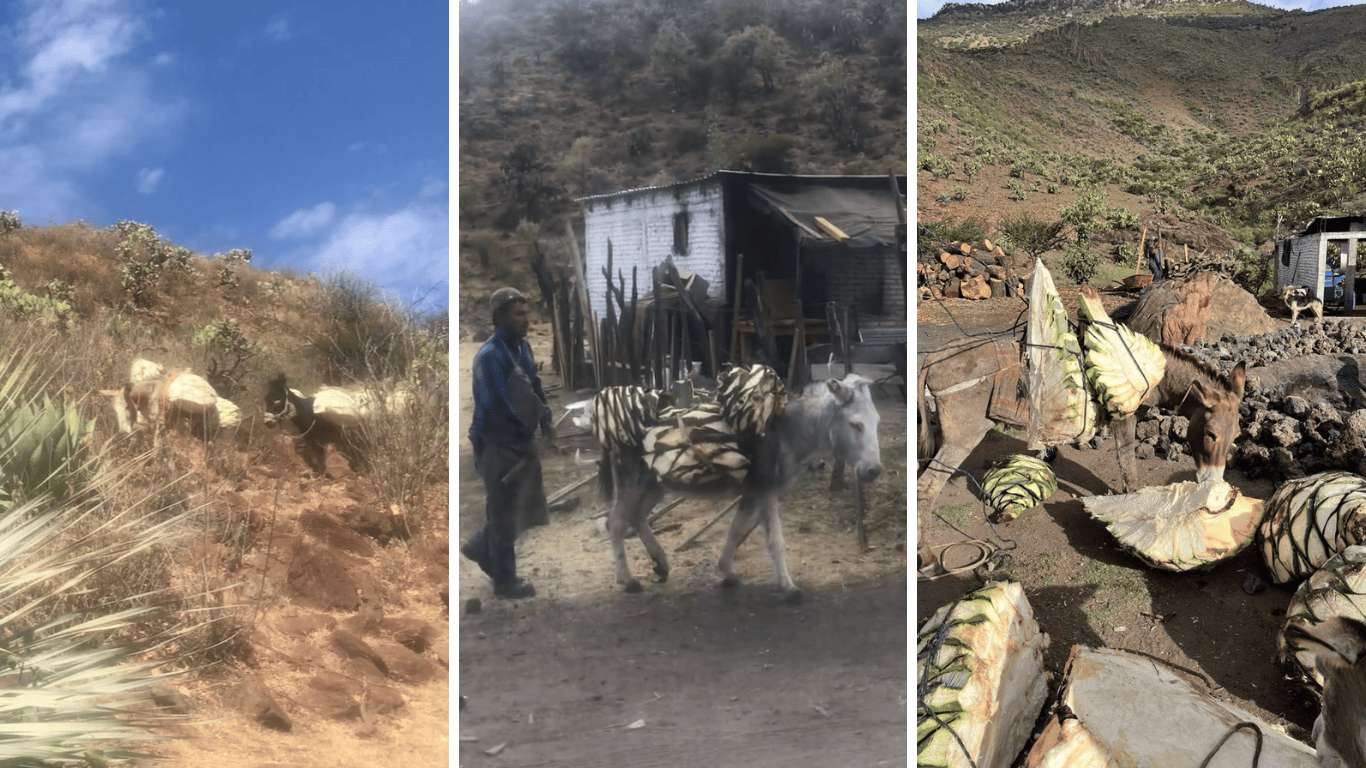
Once harvested, agave hearts are transported down steep mountain terrain by burro. Vehicles are neither practical nor desired in this landscape. This method limits volume, protects the soil, and reflects a pace of production defined by the land rather than efficiency.
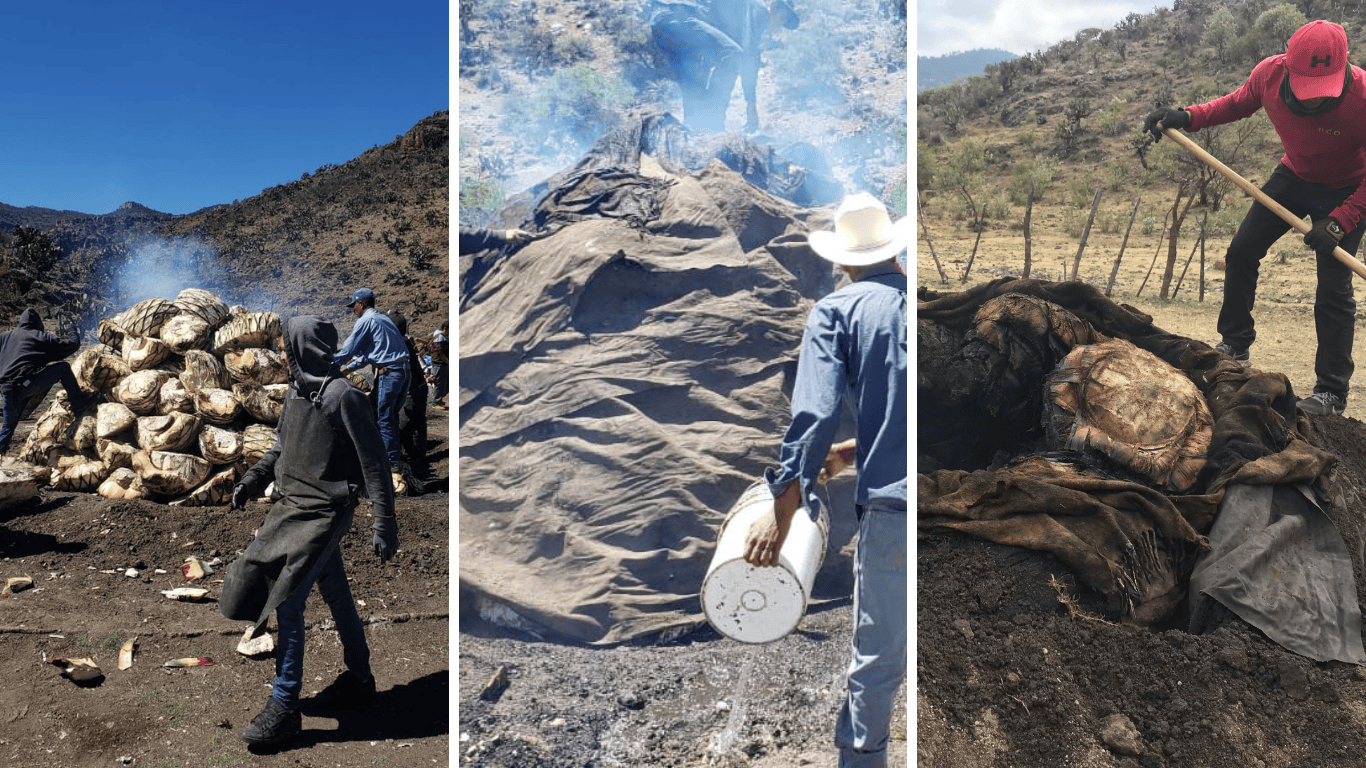
3. Earth Pit Cooking
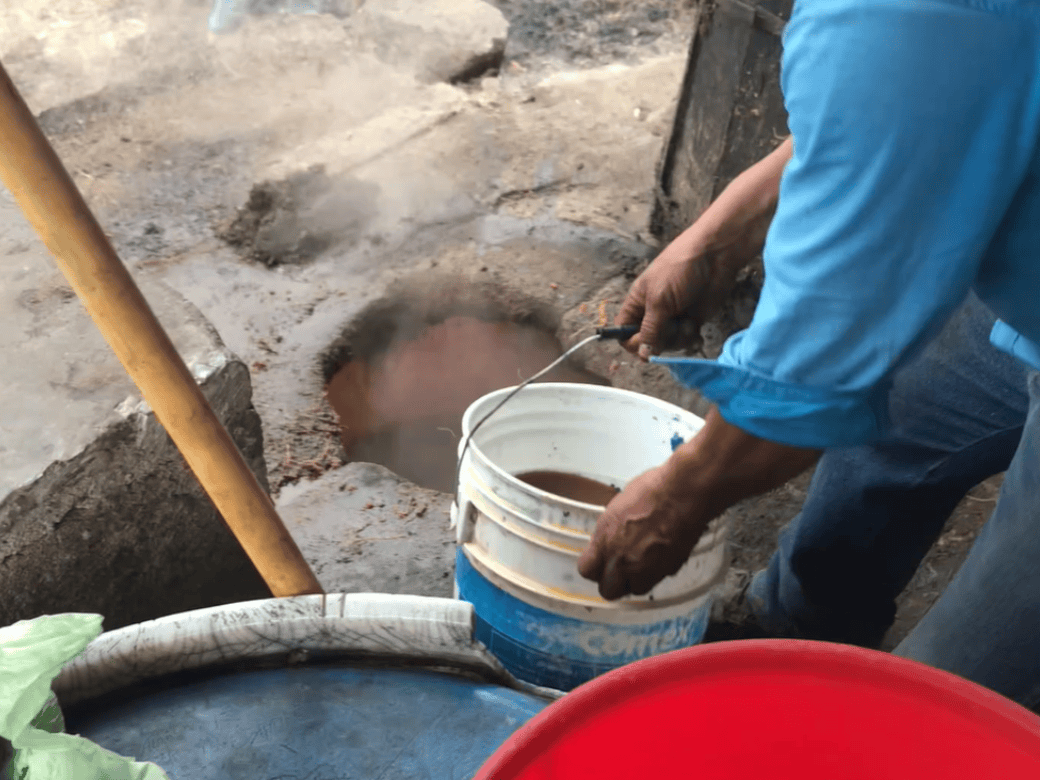
The agave is slow-cooked in earth pits over mesquite coals until tender. This traditional method converts complex sugars while imparting depth without overpowering the agave’s natural character. Cooking times vary according to climate, fuel, and batch size, requiring constant attention rather than fixed schedules.
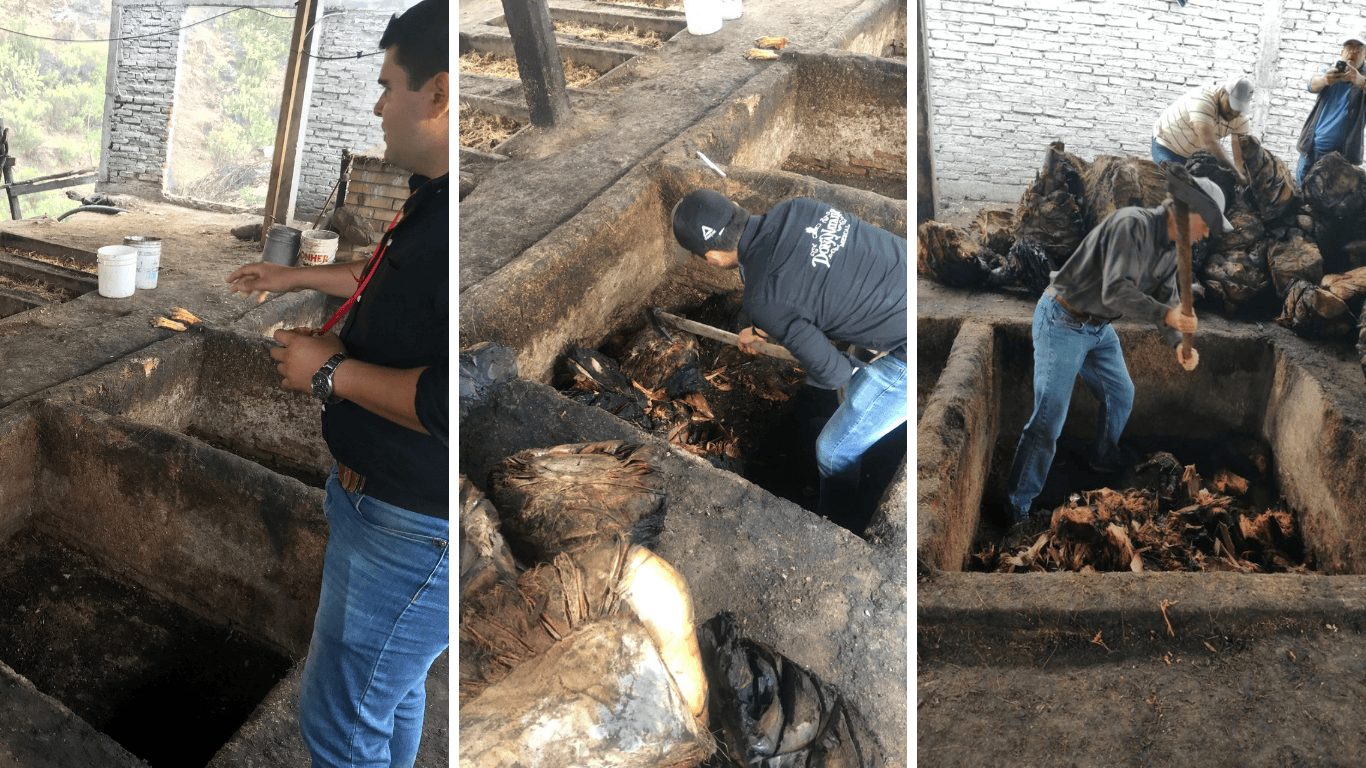
4. Hand-Chopping for Free-Run Juice
Instead of mechanical mills or tahona stones, cooked agave is carefully hand-chopped by skilled mescaleros. This gentle extraction releases only free-run juice, avoiding harsh fibers and excessive bitterness. The result is a cleaner, more refined fermentation base that defines the character of Trago Sagrado.
5. Natural Fermentation
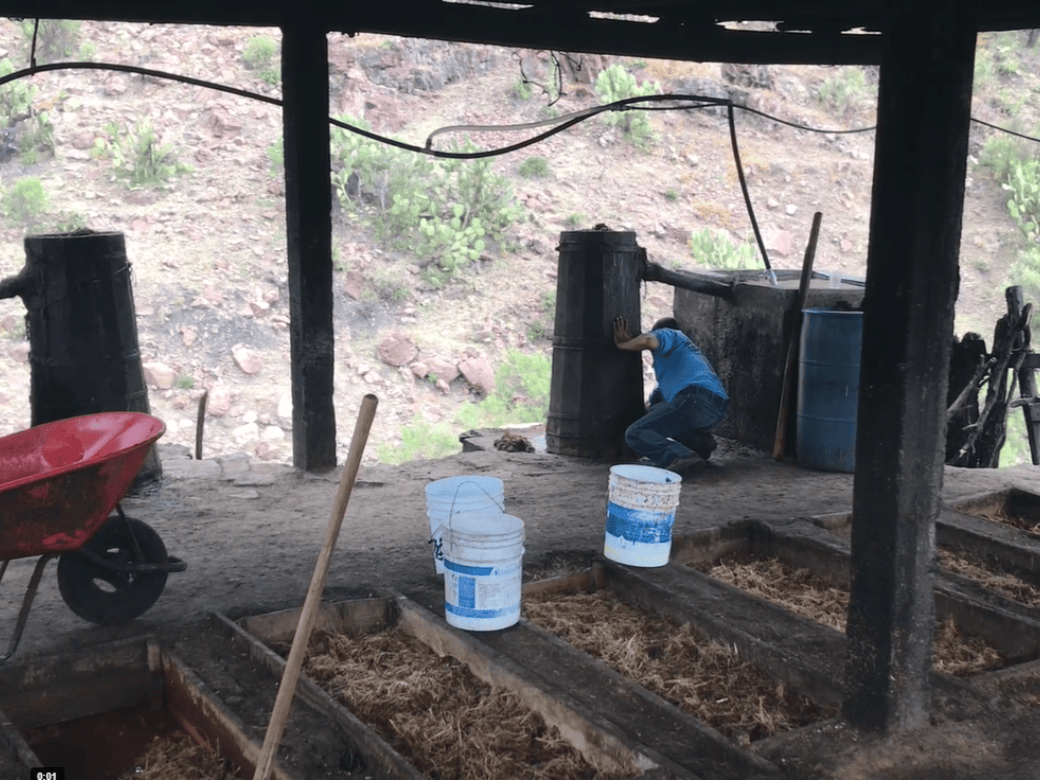
Fresh artesian spring water, drawn near the distillery, is added to the chopped agave. Fermentation occurs spontaneously, driven by wild mountain yeasts present in the environment. No commercial yeast is introduced. Flavor develops through interaction between agave, water, air, and time.
6. Wood-Fire Distillation
The fermented mash is distilled over open wood fires. Temperature is managed manually, and cuts are determined through sensory evaluation rather than instruments. Each batch reflects the conditions of its production, resulting in a mezcal defined by clarity, balance, and depth.